
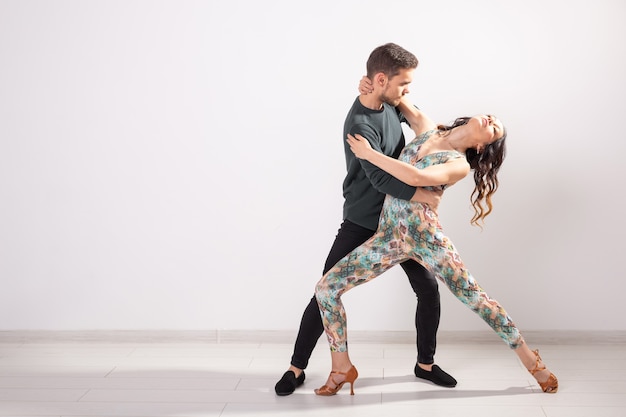
Most people walk into their first salsa class expecting the turns to be the hard part. They usually aren’t. The hard part is the first few weeks of counting to eight under your breath while the music carries on and your feet land a beat behind it. That’s completely normal, and it’s the main reason salsa is taught in levels.
If you’ve looked at a salsa class schedule in Bangalore and wondered what Level 1, Level 2 or a practice actually involves, this guide walks you through each stage. You’ll see what each level usually covers, what it tends to feel like from the inside, and how to tell when you’re ready to move up. It’s based on what we see in our studios every weekend, so it’s closer to the real experience than the tidy version you’d find on a poster.
Why Salsa Is Taught in Levels
Salsa is a partner dance built in layers. You can’t lead a turn well if your basic step still wobbles, and you can’t play with the music while you’re still thinking about where your right foot goes. Each skill sits on top of the one before it, so teaching in levels just follows the way the dance works.
Levels also keep a room moving together. When everyone is working on roughly the same problem, the instructor can spend real time on it instead of splitting attention between someone on their first day and someone who has been dancing for two years.
There’s a social reason as well. In a salsa class you rotate partners every few minutes. In a mixed room, beginners feel rushed and experienced dancers feel held back. When the levels are sorted, both people in each pair get something useful out of the rotation.
One thing worth saying early on: a level is a band of skills, not a countdown timer. Some people finish Level 1 in one cycle. Others take it twice and end up the steadier dancers for it.
What You Need Before Your First Class
Very little. You don’t need a partner for regular group classes, because partners rotate through the session. You don’t need to have danced before, and you certainly don’t need “natural rhythm”. Timing is something we teach, and most people who swear they have two left feet are simply people who have never been shown how to count music.
What helps is comfortable clothing you can move in and shoes that let you pivot. Sports shoes with heavy rubber grip tend to stick to the floor and make turns harder on your knees, so a smooth-soled shoe is better if you have one. Beyond that, bring a bit of patience for the first few classes. Everyone in a Level 1 room is in the same position, and that tends to make the awkward phase a lot less awkward.
Level 1 Salsa and the Foundations
Level 1 is where you build everything the later levels depend on. The core of it is the basic step: six steps spread across eight counts of music, with pauses on counts four and eight. It sounds simple written down, and it takes most people a few classes to do it without looking at their feet.
Once the basic feels steady, Level 1 usually adds:
- The forward and back basic, the side basic and small variations of both
- A simple right turn and left turn
- The cross body lead, which is the move most salsa patterns grow out of
- How to hold your partner, keep a light frame and stay at a comfortable distance
- The first ideas of leading and following, where the lead gives a clear signal and the follow responds to it
What does Level 1 feel like? For the first couple of weeks, a bit mechanical. You’ll count out loud, you’ll bump into the occasional partner, and you’ll have at least one class where nothing seems to stick. Then, usually somewhere around the middle of the course, the basic step stops needing all your attention. That’s the moment people start enjoying it properly, because they finally have room in their head to listen to the music.
We run Level 1 batches on weekends in Koramangala, Whitefield and Kalyan Nagar, so you can pick whichever studio is easiest to reach. If you’re starting from zero, you can book salsa classes in Bangalore for the next open Level 1 batch and join with other complete beginners.
Level 2 Salsa and Building Connection
Level 2 is where salsa starts to feel like a partner dance rather than two people doing steps near each other. The focus moves from your own feet to the connection between you and your partner.
Leads learn to guide through the frame instead of pulling with their arms. Follows learn to read those signals and stay on time through turns. You’ll spend a lot of time on tension and compression, which is the gentle push and pull through the hands that tells your partner what’s coming next. When it works, turns feel light. When it doesn’t, you’ll feel it straight away, and so will your partner.
The vocabulary also grows. Level 2 typically covers inside and outside turns, hand changes, variations on the cross body lead and short combinations that link three or four moves together. Followers usually start working on spotting, which is keeping your eyes fixed on one point during a spin so you don’t get dizzy and drift off balance.
Level 2 is the stage many students end up enjoying most. You know enough to dance a full song with someone, and you’re improving quickly enough to notice the difference from one week to the next. It’s also roughly the point where people start going to socials and dancing with strangers for the first time.
Level 3 Salsa and Dancing to the Music
By Level 3 you can get through a song. The question becomes whether you’re dancing to the music or just alongside it.
This level brings in musicality, which means hearing the structure of a salsa track and letting it shape what you do. You learn to recognise breaks, the quieter sections, the build towards a big moment, and the accents where a move lands better if it’s timed exactly. A dancer with good musicality might hold a pose on a pause or slow a turn down to match the melody, and it looks far more polished than someone rushing through a long pattern.
Level 3 usually also includes:
- Longer combinations with more changes of direction
- Double turns and faster turn sequences
- Shines, which are solo footwork sections where partners separate and dance on their own
- More styling through the arms, shoulders and body
Timing gets tested here too. Faster songs and busier patterns show up any small gap in your basics. That can be frustrating, but it’s also useful, because you find out exactly what needs work.
Level 4 Salsa and Advanced Dancing
Level 4 is less about adding moves and more about doing everything with control. Patterns get longer and more complex, with multiple spins, tricky hand changes and quick shifts in direction. But the thing that separates an advanced dancer isn’t how many moves they know. It’s how clean, relaxed and musical those moves look.
Leads at this stage learn to give quieter, more precise signals, so the dance looks effortless from the outside. Follows learn to add their own styling without losing the connection or the timing. Both partners get more room to improvise, responding to the music and to each other in the moment rather than running a memorised routine.
For dancers who want more intensive work, we also run an Intermediate class on weekday evenings in Koramangala. It’s a good fit for people who are past the early levels and want to keep training during the week, not only on weekends.
Where Practical Sessions Fit In
A practice is a practice session. There’s usually no new material being taught. Instead, you get time on the floor to repeat what you’ve learned, try it with different partners and ask questions when something isn’t working.
It sounds like a small extra, but it makes a big difference. Class time is mostly spent learning. Practical is where that learning actually settles in. Most dancers who progress quickly are the ones who practise regularly between classes, and a practice gives you a place to do it with other people at your level.
We keep separate practical sessions for Level 1 dancers and for Level 2 and above in Koramangala, plus an all-levels practical in Whitefield on weekday evenings. If you only add one thing to your weekly classes, this is the one we’d suggest.
How to Tell You Are Ready for the Next Level
There’s no exam, but there are some fairly reliable signs. You’re probably ready to move up when:
- You can keep the basic step going without counting out loud or watching your feet
- You can dance comfortably with most partners in your class, not just the ones you know
- When you lose the beat, you can find it again within a few counts
- The moves from your current level feel easy enough that you can think about styling or the music while doing them
- Your instructor suggests you’re ready
On the other hand, if faster songs still throw you off completely, or you tense up whenever a new partner rotates in, another round at your current level will probably help more than moving on. Ask your instructor. They see you dance every week and can usually tell you exactly where you stand.
Is It Okay to Repeat a Level
Yes, and it’s more common than people think. Repeating a level doesn’t mean you’ve failed at it. It usually means you’re building a stronger base than the people who rushed through.
The second time around feels completely different. You’re not scrambling to remember the steps anymore, so you start noticing the details you missed: how your weight shifts, where your hands sit, how the follow’s turn actually begins. Plenty of confident social dancers repeated Level 1 or Level 2 at some point, and it rarely held them back.
Adding Styling Classes and Private Lessons
Alongside the regular levels, there are two extras that help a lot of dancers.
Styling classes focus on how you move rather than which moves you do. We run online Ladies Styling and Men’s Styling classes on Friday evenings, covering posture, arm work, body movement and footwork. They work well for anyone from Level 2 upwards who wants their dancing to look more finished.
Private lessons are the other option. Some people want to catch up before joining a higher level. Some couples are preparing for a wedding dance. Others have one habit they can’t seem to shake in a group class. Private salsa classes in Bangalore are scheduled around your own timings, and an instructor can spend the whole session on exactly what you need. Even a handful of private sessions alongside group classes can speed things up noticeably.
Common Myths About Salsa Levels
“I need to bring a partner.” Not for regular group classes. Partners rotate, and many students come on their own. Couples-only classes, like our online Mambo Beginners batch, are the exception and are clearly marked.
“Advanced dancers just know more moves.” They usually know more, but that’s not what makes them look good. Clean basics, relaxed arms and good timing matter far more than a long list of patterns.
“Moving up quickly means I’m doing well.” Sometimes it does. Often it just means there are gaps that will show up later. Steady progress tends to last longer.
“I’m too old or too stiff to learn.” Adults of all ages learn salsa, including people who haven’t exercised in years. The steps can be kept small at first, and flexibility improves as you keep dancing.
“If I’ve danced salsa somewhere else, I can skip straight to Level 3.” Maybe. Different schools define their levels differently, and some teach a different timing altogether. A quick conversation with an instructor is the best way to find your right starting point.
Finding Your Starting Point
If you’ve never danced salsa before, Level 1 is the place to start, however confident you feel about picking things up. The foundations taught there come back in every level after it.
If you’ve learned somewhere else, or took classes a few years ago and stopped, get in touch before you book. We’d much rather place you correctly than have you spend a month in a class that’s too easy or too fast.
At Palladium Dance Company, we’ve structured our salsa programme so each level builds naturally on the last, with practical sessions, styling classes and private lessons to support you along the way. There’s a level for every starting point. The only real step you need to take right now is the first one.