
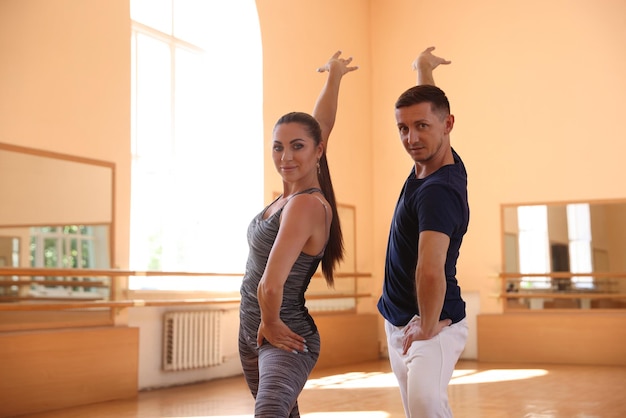
So you’ve made up your mind. You’re learning salsa. That’s the easy part, honestly. The harder question shows up right after, and it’s one almost nobody warns you about before you sign up anywhere: do you go for a group class or a private one?
They both teach salsa, sure. But that’s about where the similarity ends. The pace is different. The pressure is different. Even the way you learn to hear the music changes depending on which room you walk into. If you’ve been going back and forth on this, here’s a proper breakdown to help you figure out which format actually fits you, not just which one sounds better on paper.
What Group Classes Actually Feel Like
Picture a room with maybe ten to twenty people in it, sometimes more depending on the studio. The instructor runs through a set curriculum. Everyone’s learning the same combination at more or less the same speed, and you’ll rotate partners every few minutes because that’s just how salsa training works. You can’t really learn a partner dance without, well, switching partners.
There’s an energy in that room that’s hard to bottle any other way. Someone messes up a turn and laughs about it. The music’s loud. You’re not the only one who forgot which foot goes where. For a lot of first timers, that shared chaos actually makes the whole thing less scary, not more.
It Mirrors Real Social Dancing
Here’s the thing most people don’t think about until they’re already three classes in. Salsa isn’t really meant to be danced alone in a studio forever. Most people who pick it up eventually want to go to an actual social night, a party, somewhere with real music and real strangers to dance with. A group class kind of trains you for that without you even realizing it. You get used to different leads, different follows, people who’ve never danced with you before. That awkward five seconds of figuring out someone else’s rhythm? You’ll have already done it a hundred times by the time you hit a real social floor.
What a Private Salsa Dance Class Looks Like Instead
Now flip it. No rotating partners. No room full of strangers. Just you and the instructor, working through whatever you specifically need to fix.
The Corrections Land Faster
In a group setting, the instructor’s got maybe thirty seconds per student if you’re lucky. In a private session, every single minute is about you. If your hip movement’s off on beat three, or your timing keeps sliding on the turn, the instructor sees it right away and corrects it before it becomes a habit. That immediacy tends to speed things up a lot. Students who take private sessions often move through the basics faster than they would in a group, simply because nothing gets missed.
You’re Not Locked Into a Fixed Slot
If your job has you stuck in meetings till seven most evenings, a fixed group class time might just never work for you. Private sessions tend to be far more flexible. You can usually work around your own calendar instead of the other way around, which matters a lot if you’re one of the many working professionals in Bangalore juggling odd hours.
Built Around What You Actually Need
Say you’ve got a wedding coming up and you need a specific routine ready in six weeks. A private class can be built entirely around that. No general curriculum, no waiting for the rest of a group to catch up. Just your goal, your timeline, your steps.
So Where Does Each One Actually Win
Group classes tend to win on price. Since the cost gets split across a room full of people, it’s usually the more affordable option if you’re planning to train regularly over months.
Private classes win on speed, plain and simple. You’ll pay more per session, but you’ll likely need fewer of them to get where you want to go.
Group classes also win when it comes to social confidence. There’s really no substitute for learning to dance with people you’ve never met, and that skill only builds in a group setting.
And private classes win for anyone who gets a little frozen up dancing in front of strangers. If the thought of messing up a step in front of fifteen people makes you want to skip the whole thing entirely, a private class removes that pressure completely. You can get a step wrong ten times in a row and nobody’s watching but your instructor.
If You’re Just Starting Out
Not sure salsa’s even for you yet? A group class is the lower stakes way to find out. You’re not committing much, you get a feel for the music and the community, and if it turns out salsa isn’t your thing, you haven’t sunk a huge amount into it.
If your whole reason for learning is to eventually dance socially, group classes will get you there in a much more direct way too. You’ll already be comfortable adjusting to different partners by the time you walk into an actual social night.
And if money’s tight and you just want consistent, ongoing practice without breaking the bank every week, group classes are the more sustainable choice long term.
If You’ve Got a Specific Goal in Mind
Couples getting ready for a wedding performance almost always do better with private sessions. The instructor can build the whole routine around your actual skill level instead of trying to fit you into whatever a mixed group happens to be working on that month.
Same goes if your schedule’s a mess and a fixed weekly slot just isn’t realistic. Private classes bend around your time in a way group classes generally can’t.
If you want fast, visible progress and you’re okay paying a bit more to get there, private is usually the better bet. And if you’re someone who freezes up the second you feel watched, starting privately before ever stepping into a group room can make a real difference in how confident you feel later on.
Can You Actually Do Both
Yes, and honestly, quite a few students end up doing exactly that. A pretty common approach is starting with a few private sessions to nail the basics and build some confidence, then moving into group classes once you’re ready for the social side of things. It works better for a lot of people than picking just one path and sticking to it forever.
Palladium Dance Company builds its salsa programs around this kind of flexibility on purpose. You’re not locked into one format from day one. Students move between private and group depending on where they are in their own learning curve, which honestly makes a lot more sense than forcing everyone through the same fixed track.
A Few Questions Worth Asking Yourself First
What’s the actual goal here? Learning for fun and eventually dancing socially is a very different target than prepping for a wedding performance in six weeks. Your answer changes everything else on this list.
How much time can you really commit, not just on paper but in real life? Private classes flex around your schedule, sure, but they still need consistency to actually work. Group classes run on a fixed timetable that demands you show up. Be honest with yourself about what you’ll actually stick to.
What can you comfortably spend? Private sessions cost more per class but you’ll likely need fewer of them. Group classes cost less individually but stretch out over a longer timeline. Neither is wrong, it just depends what you’d rather pay for, speed or affordability.
And maybe the one people skip over most: how do you actually feel learning in front of others? Some people genuinely thrive off group energy, the noise, the shared mistakes, the whole vibe of it. Others shut down completely the second they feel like someone’s watching them mess up. Neither reaction makes you bad at this. It just tells you which room you’ll actually learn better in.
Final Thoughts
There isn’t one correct answer sitting out there waiting to be found. A group salsa dance class and a private one teach the same core skill, they just take completely different roads to get you there. Group classes build social confidence and a sense of community that’s hard to fake. Private classes build fast, focused technique and give you the flexibility a packed schedule often demands.
Which one’s right for you really comes down to your goals, your calendar, your budget, and honestly, just how you personally learn best. Some people need the chaos and energy of a full room to stay motivated. Others need quiet, focused, one-on-one time to actually absorb what they’re being taught.
If you’re still torn, Palladium Dance Company runs both formats and can help point you toward whichever starting point actually makes sense for where you’re at. And if focused, one-on-one training sounds like the better fit right now, it’s worth taking a look at their private salsa dance classes directly.