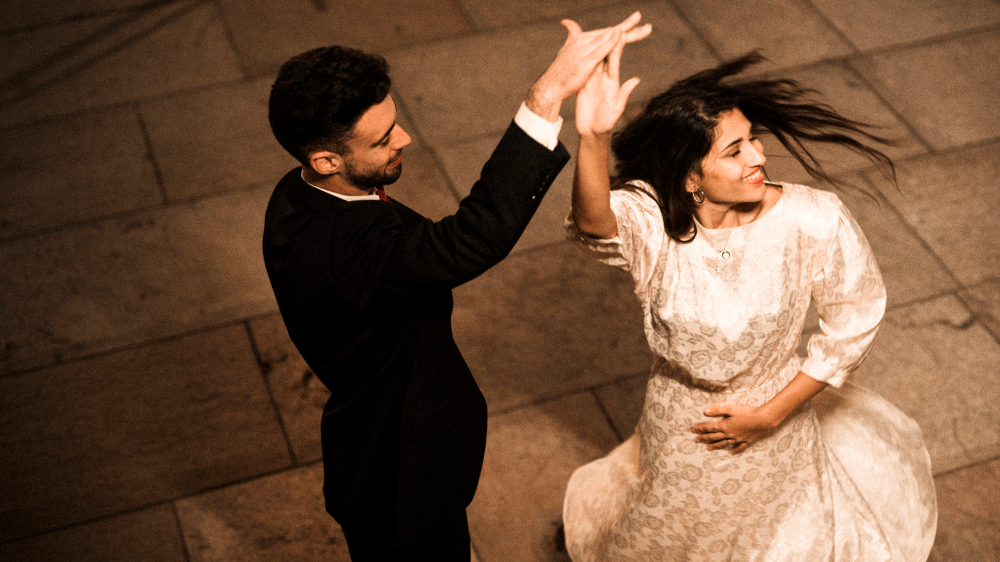
Look, if your only exposure to salsa is watching a 15-second hyper-edited Reel of professional dancers, you are probably terrified. The spins are blindingly fast, the arm styling looks like some kind of complex sign language, and the footwork happens at a speed that makes your eyes hurt. It is completely normal to watch that and think, “I trip over my own shoelaces, I could literally never do that.”
But we need to separate stage performance from actual social dancing.
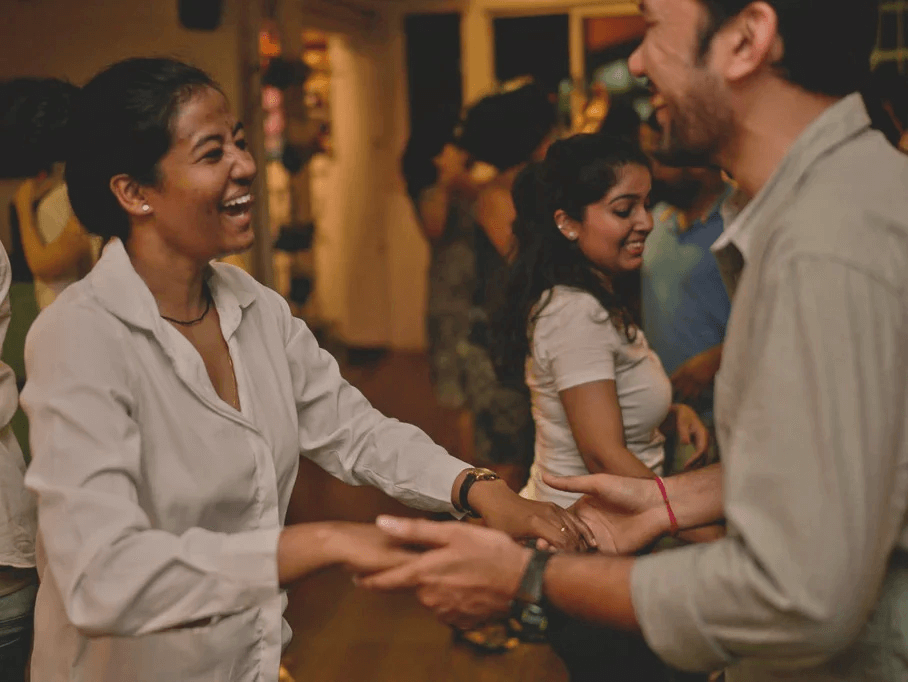
Here at Palladium Dance Company in Indiranagar, we see brand new students walk through the door every single week. They come in straight from the office, looking a little exhausted, and immediately apologize for having “zero rhythm” or “two left feet.” And honestly? By the end of their fourth class, those exact same people are laughing, sweating, and actually dancing with strangers.
Salsa is not some exclusive club for people who were born with perfect coordination. It is just a physical skill. Let’s break down what actually makes it hard, what is just in your head, and what you are really signing up for when you book that first class.
The “I Have Zero Rhythm” Myth
I hear this every single day. “I literally cannot keep a beat. I’m basically an NPC when music plays.”
Here is the truth: rhythm isn’t magic. It is just pattern recognition. Think about when you first started driving in Bangalore traffic. At first, you were hyper-aware of every single movement. Clutch, gear, indicator, mirror. It felt overwhelming and you were stressing. But after a few months, you were driving home via 100 Ft Road while thinking about what you wanted for dinner, completely on autopilot.
Your brain does the exact same thing with dance. Salsa is built on a very specific, repetitive 4/4 time signature. We don’t expect you to hear every single conga hit or cowbell on day one. We just teach you how to find the heavy bass drum. Once your brain locks onto that one sound, the rest of the music just becomes background noise. You don’t need to be a musician. You just need to be willing to count to four.
Let’s Talk About the Footwork (It’s Just Walking)
People imagine salsa involves doing complicated math with their feet. It doesn’t.
The entire foundation of the dance is the “basic step.” And what is the basic step? It is literally just walking in place. You step forward, you bring your other foot to meet it, and you step back. That’s it. You are just shifting your body weight from your left foot to your right foot.
If you can walk across your living room to get a glass of water, you have the physical capability to do the salsa basic. In our beginner batches, we spend a ridiculous amount of time just doing this. We strip away the fancy turns and the partner holds. We just put on a slow song and get you comfortable shifting your weight. Once your legs understand the basic step, everything else is just built on top of it.
For the Couples: Why Salsa is the Ultimate Date Night Upgrade
Let’s pivot for a second and talk to the young couples in Indiranagar. Look, we get it. Dinner and a movie is giving major 2015 energy. “Netflix and chill” is completely played out, and honestly, just sitting at a cafe scrolling on your phones next to each other is lowkey an ick.
If you are in a new relationship, a situationship, or just stuck in a massive date night rut, taking a salsa class together is a massive green flag for your relationship. Here is why couples highkey need to try this:
It Breaks the Touch Barrier (Without Being Weird)
When you are dating, figuring out physical touch can be awkward. Salsa forces you to hold each other, but in a completely structured, safe, and respectful way. You have to hold hands, put a hand on a shoulder, and maintain a physical “frame.” It instantly breaks the touch barrier and builds physical comfort without the pressure of a formal, stiff date.
It Gets You Out of the “Roommate Phase”
If you’ve been together for a while, it is so easy to just go home, order Swiggy, and stare at a screen. Salsa forces you to make actual eye contact. You have to look at each other, communicate without words, and literally sync up your bodies. It brings back that spark and forces you to be fully present with each other. No phones allowed on the dance floor.
You Get Main Character Energy Together
There is nothing cooler than walking into a pub in Indiranagar on a Friday night, hearing a salsa track come on, and just knowing you can actually dance to it. Learning this together gives you a shared skill that nobody else in your friend group has. It’s an inside joke, a shared hobby, and a massive confidence booster for both of you.
And don’t worry if one of you is way more coordinated than the other. We see it all the time. The trick is to leave your ego at the door, laugh when you mess up, and just vibe. It is honestly hilarious when you both step on each other’s toes, and it makes the whole experience way more fun.
The Partner Factor: Yes, You Will Step on Toes
For the solo folks, let’s talk about the fear of dancing with strangers.
First of all, let’s normalize stepping on toes. It is going to happen. It is the literal tax you pay for learning a partner dance. Every single person in that room has stepped on a toe. The instructors have stepped on toes. The key is to just say “my bad,” laugh, and reset. Nobody is keeping score.
Leading and Following is Just a Conversation
People think leading means aggressively pushing someone around, and following means just being a dead weight. It’s actually a physical conversation. The leader uses their frame (their arms and back) to suggest a direction, and the follower listens to that physical signal and moves. It takes a few weeks for your brain to translate those physical hints into movement. Until then, it feels a bit like two people trying to walk through a narrow doorway at the same time. It’s awkward, it’s funny, and it gets better every week.
The Actual Hard Parts (Because I Won’t Lie to You)
I’m not going to sit here and tell you it’s effortless. There are a few things that will genuinely frustrate you in the first month. Knowing what they are ahead of time helps.
The “Brain Freeze” When the Instructor Speaks
You know the moment. The instructor says, “Okay, step forward left, cross right, turn left, release right, and catch on three.” And your brain just completely blue-screens. You forget which leg is your left leg. You forget how to walk.
When this happens, just stop trying to do the turn. Go back to your basic step. Just march in place until the instructor resets the class. Do not panic. We have all been there.
Hearing the Beat in a Messy Song
Some salsa songs are incredibly layered. There are trumpets blaring, a singer belting out lyrics, and three different percussion instruments going off. To a beginner, it just sounds like a wall of noise. You will lose the beat. When you do, just watch the instructor’s shoulders or listen for the heavy drum. Don’t try to listen to the whole song at once.
The Ego Hit of Looking Silly
This is the biggest hurdle. You are an adult. You are probably good at your job. You pay your taxes. And suddenly, you are in a room trying to coordinate your hips and your feet, and you look a bit like a baby giraffe learning to walk.
It bruises the ego. The students who quit are the ones who try to look perfect on day one. The students who actually get good at this are the ones who are willing to look completely ridiculous for the first three weeks so they can look awesome by month three. Touch grass, leave your ego at the door, and just let yourself be a beginner.
What Your First Month at Palladium Actually Looks Like
If you commit to coming to our Indiranagar studio once or twice a week, here is a very realistic timeline of what is going to happen in your brain and your body.
Week 1: Survival Mode. You are counting out loud under your breath. You are staring at your feet. You are probably stepping on toes. You will leave the studio feeling mentally exhausted because your brain is working overtime just to process the physical movements.
Week 2: The Click. The basic step stops feeling like a math equation. You can do it without looking at the floor. You will learn your first simple right turn, and when you finally land it facing the right direction, you will feel like you just won an Olympic gold medal.
Week 3: The Vibe Shift. This is when partner work stops feeling weird. You start to actually feel the physical signals from your partner. You stop anticipating the moves and start actually reacting to them. You are making fewer mistakes, and when you do mess up, you know how to recover without stopping the dance.
Week 4: Main Character Energy. You can get through a full combination with a partner. The music doesn’t sound like noise anymore; it sounds like a guide. You are starting to add a little bit of your own style to the moves. And most importantly, you are actually having fun.
The Indiranagar Post-Class Vibe
One thing we need to talk about is what happens after the class ends.
Learning salsa in Indiranagar comes with a massive perk: the social scene. We are surrounded by some of the best cafes, breweries, and pubs in Bangalore. A lot of our regulars treat Tuesday or Thursday night class as the start of their evening. You finish the session, you grab a quick coffee or a beer with the people you just rotated with, and you talk about the moves you just learned.
It takes the pressure off. It stops being just a “class” and starts being a weekly social habit. You aren’t just learning to dance; you are building a completely new social circle outside of your office and your existing friend group.
Final Thoughts: Just Show Up
Is salsa hard to learn? It requires patience. It requires you to be okay with making mistakes. It requires you to physically tire yourself out.
But it is not impossible.
The absolute hardest part of learning to salsa is not the footwork. It is not the turns. The hardest part is sitting on your couch on a Tuesday evening, debating whether or not to go to the studio, and convincing yourself to just go.
You don’t need to buy special dance shoes for your first class. Just wear clean sneakers or flat shoes that don’t grip the floor too much. Wear clothes you can sweat in. Bring your partner, or come completely solo.
Check our schedule on the website, grab a spot in the beginner batch, and just walk through the door. We will take it from there.